




How Does AI Recognize Different Vehicle Models?
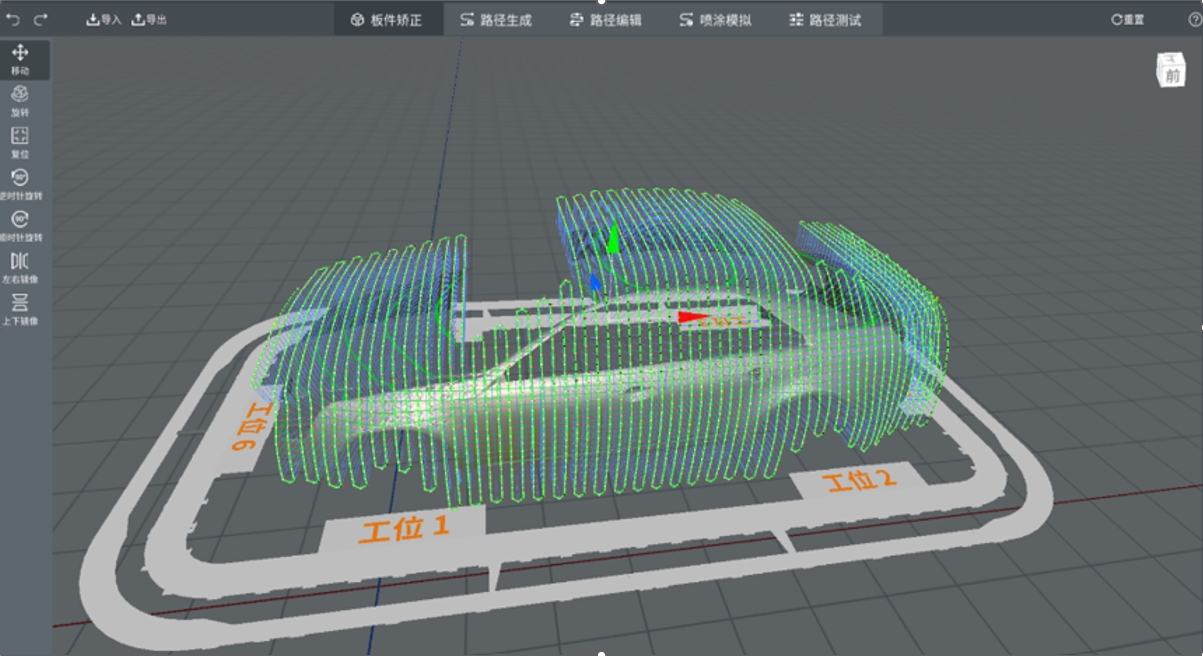
Why Does Each Vehicle Model Require a Different Spray Path?
Automotive refinishing involves more than simply moving a spray gun across a vehicle’s surface. Vehicle dimensions, panel contours, bumper designs, and repair areas vary by manufacturer and model. As a result, each vehicle requires a spray path adapted to its specific body geometry and refinishing requirements.
In conventional refinishing operations, technicians visually inspect the vehicle and rely on their experience to determine the spray distance, gun movement, and application area. This process can require considerable setup time, while differences in experience and operating technique may also lead to variations in finish quality.
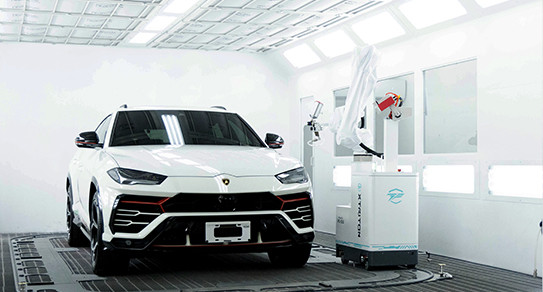
The XTRITON Intelligent Spray Robot integrates machine vision, AI vehicle recognition, and 3D modeling technologies to analyze vehicle contours and panel positions. The resulting vehicle data provides the foundation for subsequent intelligent spray path planning.
How Does AI Vehicle Recognition Work?
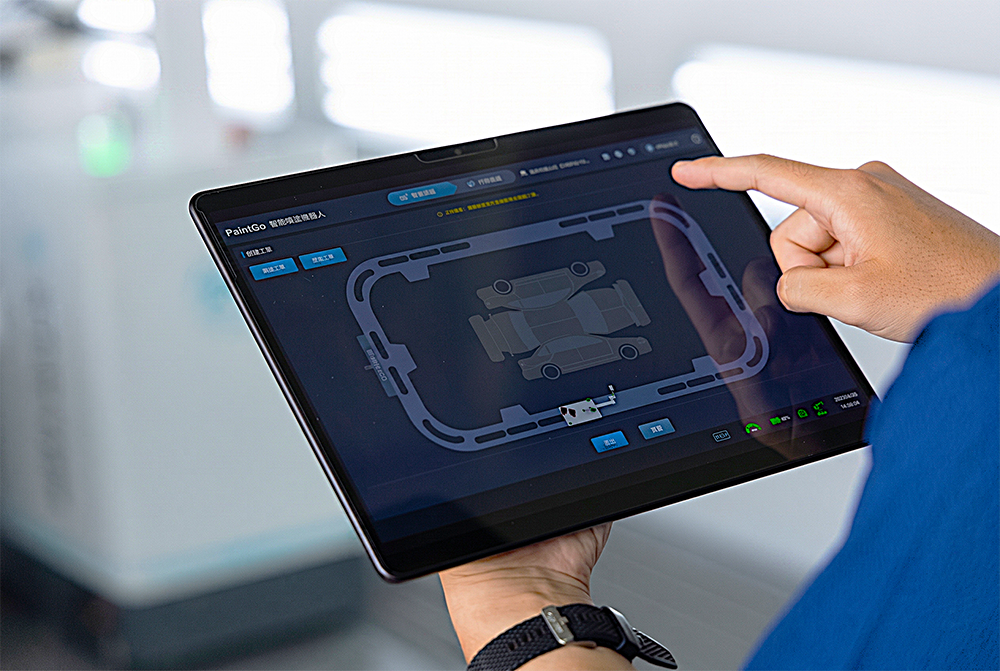
When a vehicle enters the operating area, the system captures images of the vehicle body and identifies its contours, dimensional proportions, panel positions, and surface characteristics. AI algorithms then analyze the body structure and the specified refinishing area.
Once the recognition process is complete, the system creates a corresponding digital vehicle model. Vehicle information, target panel data, and surface geometry are then transferred to the intelligent path planning system, providing the essential data required to automatically generate the spray trajectory.
From Vehicle Recognition to Intelligent Path Planning
The purpose of AI vehicle recognition is not limited to identifying the vehicle manufacturer or model. More importantly, it enables the system to understand the actual dimensions, position, and surface curvature of the workpiece.
After recognizing the vehicle body, the system can plan the spray gun’s direction of movement, application sequence, spray distance, and spray angle according to the target panels and refinishing area. This reduces manual setup time and improves operational efficiency when switching between different vehicle models.

What Benefits Does AI Vehicle Recognition Bring to Collision Repair Centers?
AI Vehicle Recognition helps collision repair centers reduce the manual setup required when switching between different vehicle models, allowing technicians to prepare vehicles for refinishing more efficiently.
Recognition data can also be integrated with intelligent spray paths, application parameters, and work order information to create a comprehensive digital refinishing record. This improves quality management, production traceability, and process consistency.
For 4S dealerships, authorized body repair centers, and large collision repair facilities servicing multiple vehicle brands and models, AI Vehicle Recognition helps establish a more standardized, repeatable, and intelligent refinishing workflow.
AI Vehicle Recognition Is the First Step Toward Intelligent Spray Automation
Within the XTRITON Intelligent Spray Robot, AI Vehicle Recognition serves as the starting point of the automated refinishing workflow.
Once vehicle recognition is completed, the system proceeds with 3D path planning, automated spray control, and digital job data management, creating a fully integrated refinishing process from vehicle recognition and path generation to spray application.
By combining AI, automation technologies, and digital workflow management, automotive refinishing operations can reduce reliance on individual experience while achieving higher productivity, more consistent finish quality, and a smarter, more manageable collision repair process.