




How Does a Quick-Release Spray Gun Module Reduce Maintenance Downtime?
Maintenance Downtime Is Part of Automation Efficiency
When evaluating an automated spray painting system, most people first look at painting speed, AI recognition capabilities, and the robotic arm.
Once the equipment enters daily operation, however, another question quickly becomes important: How long must the equipment stop for cleaning, inspection, or maintenance?
For an automotive refinishing center, equipment value depends on more than how quickly it paints. It also depends on how efficiently the system can return to work after routine servicing, spray gun cleaning, or component inspection.
This matters especially in high-frequency daily production. Straightforward maintenance procedures and modules that can be removed and refitted quickly directly affect equipment availability and the flow of work on the shop floor.
True automation efficiency is about both operating speed and how quickly equipment can return to service when maintenance is required.
Why Does Spray Painting Equipment Need Regular Maintenance?
Automotive spray painting equipment is continually exposed to coatings, solvents, and atomized coating materials. The spray gun itself contains components closely linked to application quality, including the fluid nozzle, air cap, and fluid passages.
Whether painting is manual or automated, a spray gun is not a fit-and-forget component.
Cleaning, inspection, consumable replacement, and routine servicing are all part of the normal process.
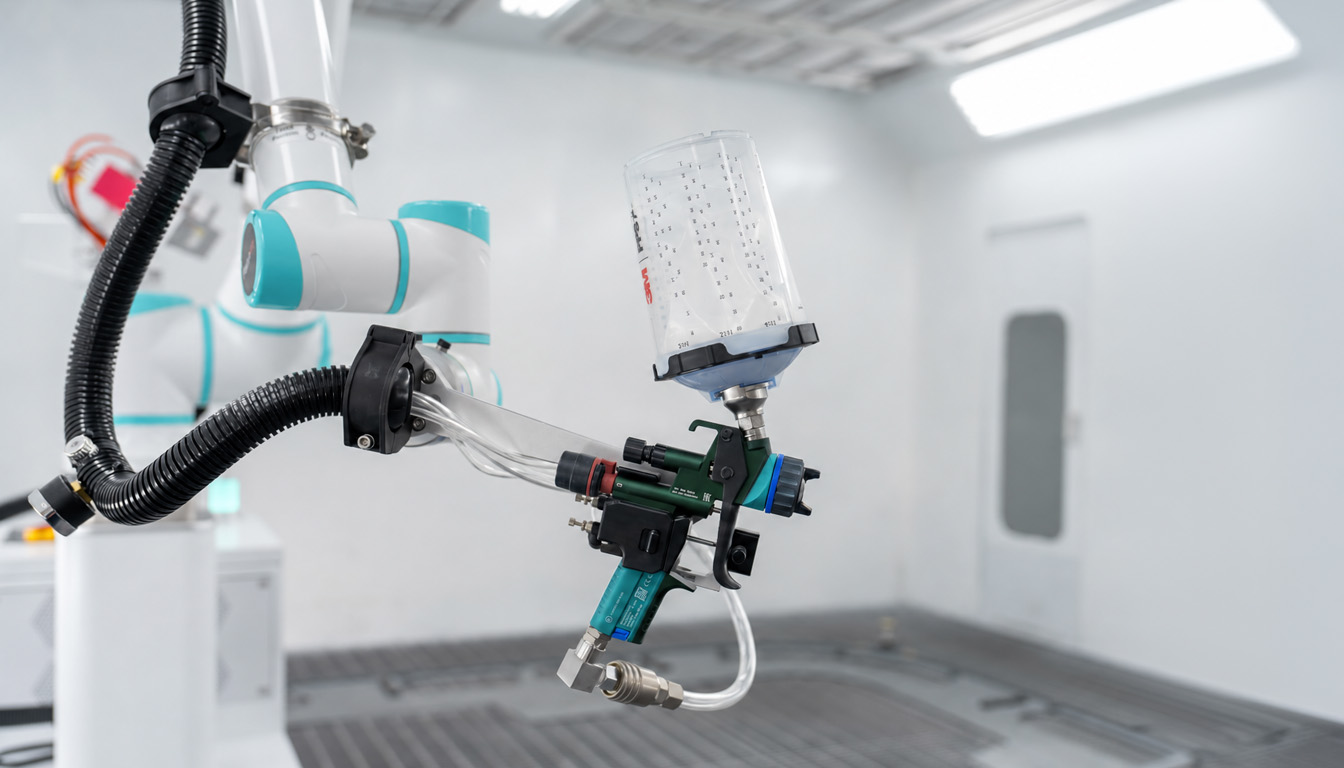
Quick-Release Design Simplifies Removal and Refitting
The XTRITON PG-90E combines Modular Design with a quick-release arrangement so that components requiring cleaning, inspection, or maintenance can be removed from the main equipment more efficiently.
Rather than repeatedly carrying out complex disassembly of the entire system, maintenance personnel can focus on the module that needs attention. This reduces unnecessary removal and refitting steps, as well as the complexity of repeatedly handling other connected components during maintenance.
For a busy automotive refinishing center, equipment maintenance is a routine operational requirement, not an occasional event. The value of Modular Design lies in limiting how much of the surrounding system needs to be disturbed, making the sequence from cleaning and inspection to restarting work more straightforward.
Quick-release design does not eliminate maintenance. It makes maintenance simpler and more direct.
Conventional Disassembly vs. a Quick-Release Module
The core value of a quick-release module is not maintenance-free operation. It is the ability to limit disassembly of other parts of the system and create a more direct path from cleaning and inspection to returning the equipment to work.
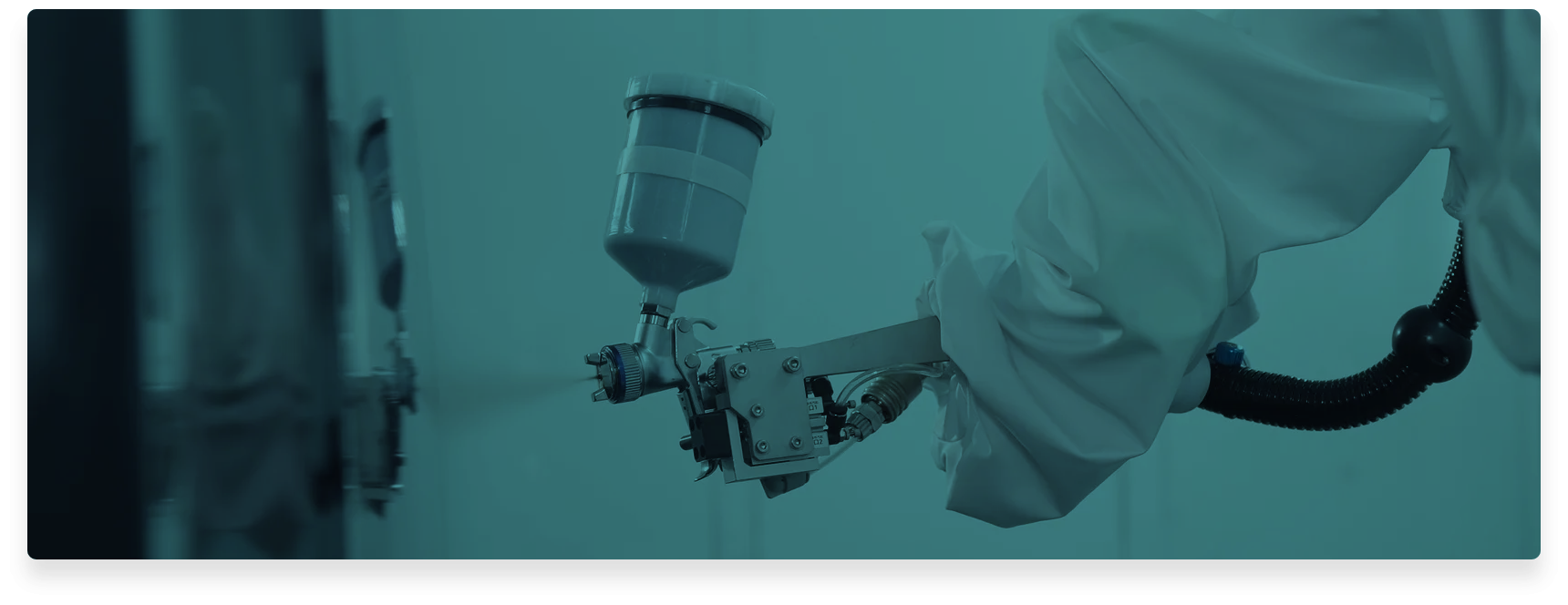
Why Does Maintenance Downtime Affect Equipment Throughput?
In a high-use automotive refinishing center, painting speed is only one factor in operating efficiency. The downtime needed for cleaning, inspection, and servicing matters too.
If every cleaning or service task requires a lengthy shutdown, the amount of work that can actually be completed each day will be affected, regardless of how fast the equipment paints.
Simplifying maintenance and removal-and-refitting procedures is therefore an important part of improving equipment utilization.
Quick-Release Does Not Mean Maintenance-Free
A Quick-Release Spray Gun Module is designed to make cleaning, inspection, and maintenance more convenient. It does not remove the need for routine servicing.
Painting equipment must still be cleaned and maintained in accordance with the coating system in use, operating frequency, and equipment requirements.
Effective management of an AI Spray Painting Robot is not about seeing how long it can run without servicing. It is about completing the required work in a more standardized and efficient way.
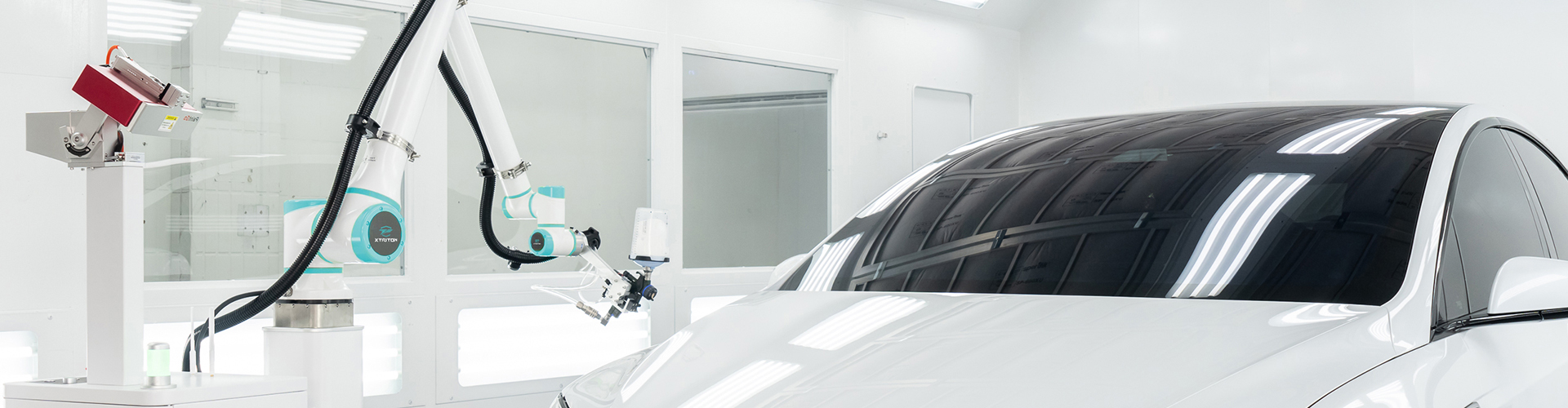
Beyond Painting Speed: Efficiency Across the Equipment Lifecycle
The efficiency of automated equipment cannot be measured solely by the speed of its robotic arm.
Once a system enters operation, the business must manage its full lifecycle: installation, operation, cleaning, inspection, consumable replacement, maintenance, and the return to production.
The PG-90E Quick-Release Spray Gun Module may be less immediately visible than AI vehicle recognition or 360-degree all-around painting, but it is a practical design feature of an AI Spray Painting Robot.
Mature automation should do more than make equipment work faster. It should also allow that equipment to return to service more efficiently when maintenance is needed.
Explore XTRITON AI Spray Painting Solutions
To learn more about the capabilities, implementation, and practical applications of an AI Spray Painting Robot, explore the product information or contact XTRITON directly.