




How AI Path Planning Optimizes Spray Trajectories
PG-90E Technical Insights | PT-004
From vehicle recognition to spray application: giving every movement a clearer basis
In automotive refinishing, coating quality depends on more than the paint and spray gun. It is also closely linked to the spray gun's path, distance, angle, travel speed, and the overlap between spray passes.
Conventional manual spray painting relies heavily on the technician's experience and feel. Different vehicle models, curved panels, and repair areas require continual adjustments to apply the coating evenly across the target surface.
The XTRITON PG-90E Intelligent Spray Robot combines machine vision, AI recognition, and intelligent path planning to turn spray movements that require repeated judgment into an automated workflow that can be planned and controlled.
AI Spray Path Planning Starts with Identifying the Work Area
Doors, hoods, fenders, and bumpers vary in size, outline, and surface curvature across vehicle models.
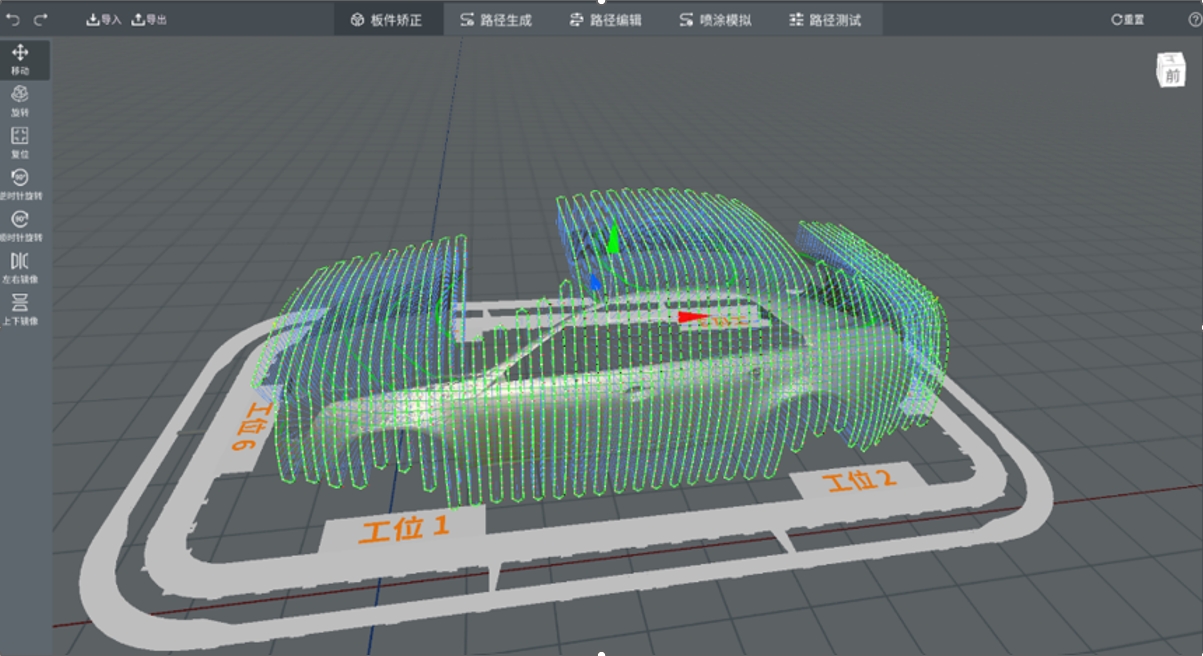
Before planning a spray trajectory, the system must identify the target panel and the area to be refinished. This provides the basis for determining the spray gun's path.
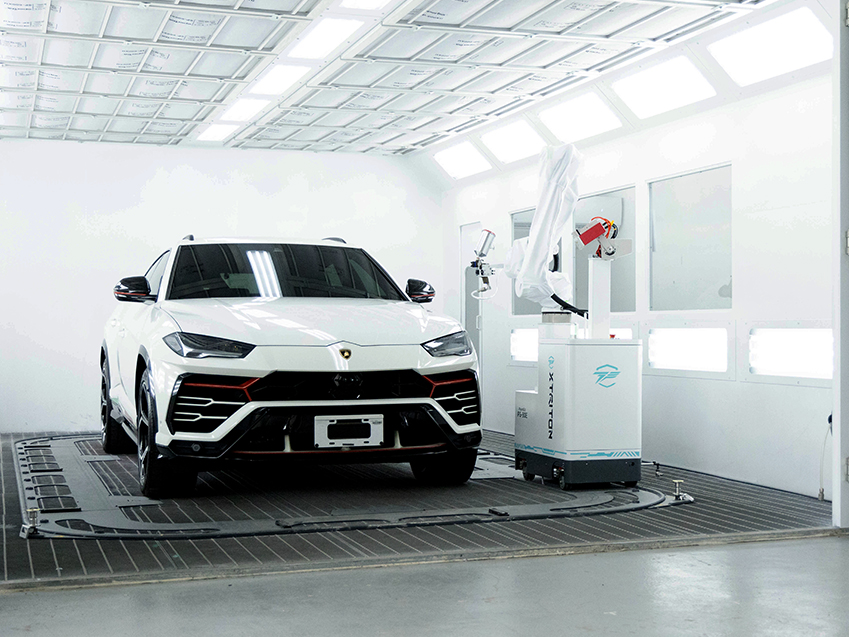
The PG-90E integrates machine vision and AI recognition to identify vehicle models and work areas, then works with intelligent planning functions to carry out automated spray painting. Rather than relying solely on fixed mechanical movements, the equipment can plan the painting workflow around the requirements of each job.
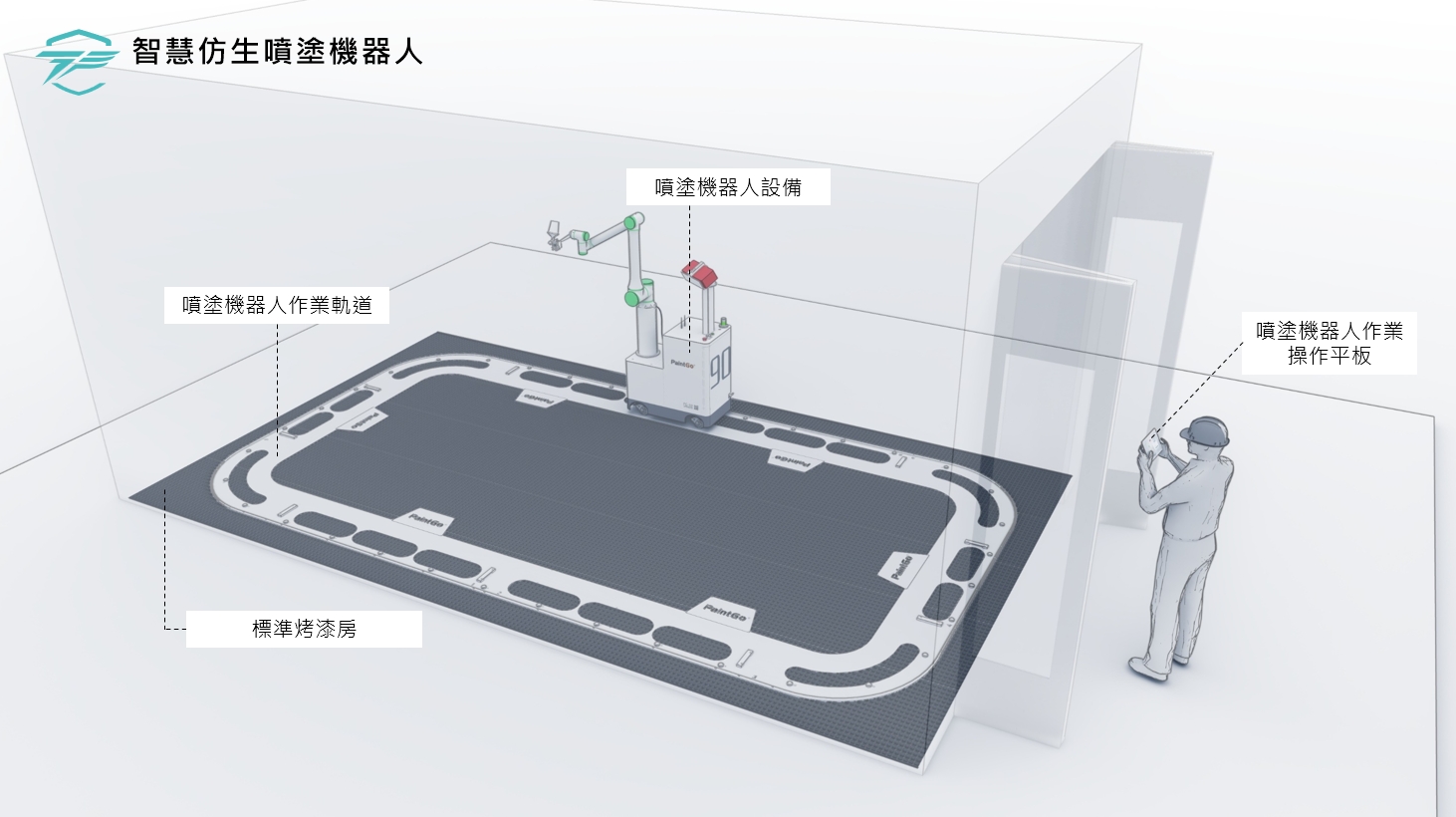
This diagram illustrates a conceptual spray path planning workflow. It does not represent the actual algorithm architecture of the PG-90E.
Why Does the Spray Trajectory Affect Finish Quality?
A spray path is more than a route that takes a robotic arm from a starting point to an endpoint.
The key question is how to maintain appropriate application conditions while the spray gun is moving.
Spray gun distanceThe distance between the spray gun and the panel surface affects coating coverage. Excessive variation in this distance can lead to inconsistent application.
Spray angleFor curved panels or surfaces facing different directions, the spray gun angle needs to follow the surface geometry to reduce the risk of uneven local coverage.
Travel speedSpray gun travel speed must be coordinated with the paint feed. Moving too quickly or too slowly can affect paint film formation.
OverlapAdjacent spray passes need an appropriate degree of overlap to reduce the likelihood of missed areas or localized paint buildup.
Intelligent Path Planning Is Not Just About the Shortest Distance
An optimal spray trajectory cannot be evaluated solely by the distance traveled by the robotic arm.
For an automotive refinishing center, the more important goal is to balance coverage, coating consistency, and execution efficiency within the specified paint system, panel geometry, and application conditions.
A door and a hood, for example, have different shapes and may require different spray movements. Using exactly the same fixed path may not adequately address the refinishing requirements of each panel.
The value of intelligent path planning lies in integrating vehicle recognition, work area information, and spray gun motion control so that the automated equipment can complete the job according to a planned workflow.
From Individual Technique to Repeatable Refinishing Workflows
For large collision repair centers and vehicle preparation facilities, the challenge is not simply completing a single painting job. It is maintaining stable operating standards across different vehicle models, work shifts, and a continuous flow of vehicles.
With AI path planning and robotic arm control, spray movements can be repeated under specified conditions, reducing differences in movement between operators.
This does not mean that the equipment replaces all professional judgment. Paint mixing, surface preparation, environmental conditions, and final quality inspection remain essential parts of the complete automotive refinishing process.
The core value of intelligent automation is to assign repeatable movements that can be standardized to the equipment, allowing skilled technicians to focus on work that requires experience and judgment.
AI Path Planning Supports More Standardized Refinishing Operations
XTRITON PG-90E integrates machine vision, AI recognition, path planning, and spray control that replicates skilled human movements within automated equipment, providing another way of working for the automotive repair and refinishing industry.
When spray trajectories, travel speed, and application conditions can be planned and controlled through the system, businesses can gradually establish clearer, more repeatable painting workflows.
From the finish quality of an individual panel to the management of an entire collision repair center, the value of AI path planning goes beyond making a robotic arm move. It gives every spray movement a clearer basis.