




XTRITON Automated Spray-Painting Robot
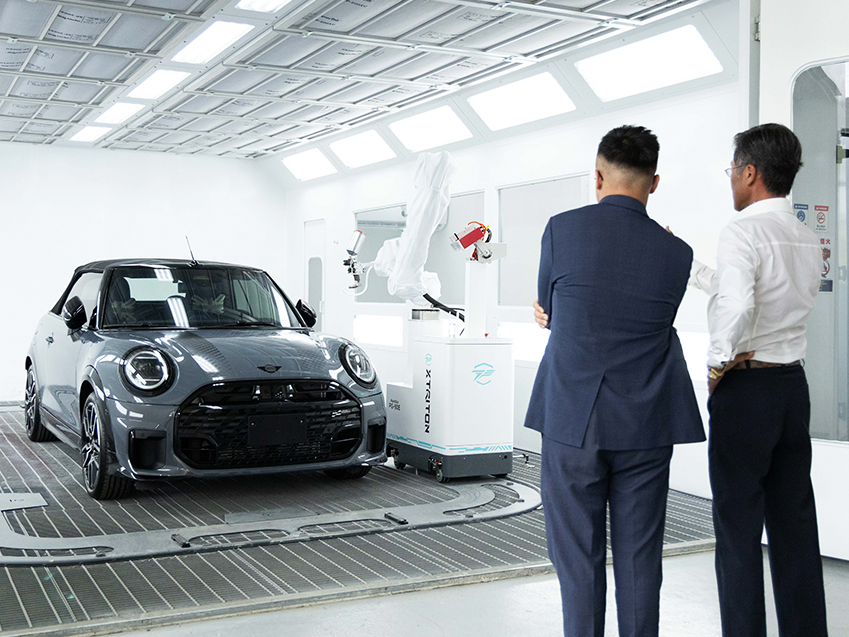
Automated Spray-Painting Robots: A New Revolution in Intelligent Industrial Coating
With the advancement of Industry 4.0, spray-painting technology is steadily moving toward greater intelligence. In Taiwan’s automotive painting market, traditional spray-painting operations rely heavily on manual labor, making them not only labor-intensive but also difficult to ensure consistent quality and operational safety. However, as labor costs continue to rise and environmental regulations become increasingly stringent, traditional manual spray painting is facing growing challenges.
XTRITON believes that automated robotic arm spray painting is not only a trend, but a key driver for improving efficiency and quality. By integrating AI vision technology with robotic automation systems, it delivers high-efficiency, low-barrier coating solutions tailored for Taiwan’s small and medium-sized automotive spray-painting market.
The Transition of Spray Painting from Manual Work to Automation
Most practitioners in Taiwan’s automotive spray-painting market have decades of hands-on experience, having learned the craft from apprenticeship and mastering every step of the process. However, labor shortages are becoming increasingly severe. Not only are fewer young people willing to enter the field, but experienced craftsmen are also harder to recruit. As a result, the efficiency and consistency of manual spray painting are difficult to maintain—especially when handling small-batch, highly customized paint jobs. The emergence of automated spray-painting robots allows this hard-earned expertise to be extended. Taking XTRITON’s technology as an example, robotic arms can precisely control paint volume and spray paths, preserving craftsmen’s professional judgment while significantly shortening operation time. In this way, traditional craftsmanship and modern technology work hand in hand.

Balancing Efficiency, Health, and the Environment
Nearly 20,000 small and medium-sized paint shops in Taiwan rely on manual operations each year. However, manual spray painting is not only time-consuming, but also generates large amounts of volatile organic compounds (VOCs). These emissions increase environmental pressure and pose serious risks to human health, potentially causing respiratory irritation and long-term chronic illnesses.
XTRITON’s automated spray-painting robots optimize paint usage through intelligent systems, reducing VOC emissions by more than 30%. This not only helps businesses comply with regulations, but also improves the working environment—protecting middle-aged and senior workers from long-term exposure risks and achieving a true balance between efficiency, health, and environmental responsibility.
Automated robotic arm spray painting is reshaping the industrial landscape of Taiwan’s automotive coating market.
This technology not only addresses current industry pain points, but also creates a new model for integrating traditional craftsmanship with modern technology.
From the three key perspectives of technological innovation, industrial transformation, and sustainable development, the following analysis explores how automated spray-painting robots are driving industry upgrades:
1. Technological Innovation: From Precision Control to System Integration
Precise Spatial Trajectory Calculation
Modern spray-painting robotic arms adopt a six-axis, multi-degree-of-freedom design, enabling optimal spray paths to be calculated along complex 3D vehicle surfaces. Compared with the ±5 mm tolerance of traditional manual spraying, robotic arms can control precision to within ±0.05 mm, making them especially suitable for multi-layer coating requirements in vehicle body repair.
Explosion-Proof Safety and Intelligent Monitoring
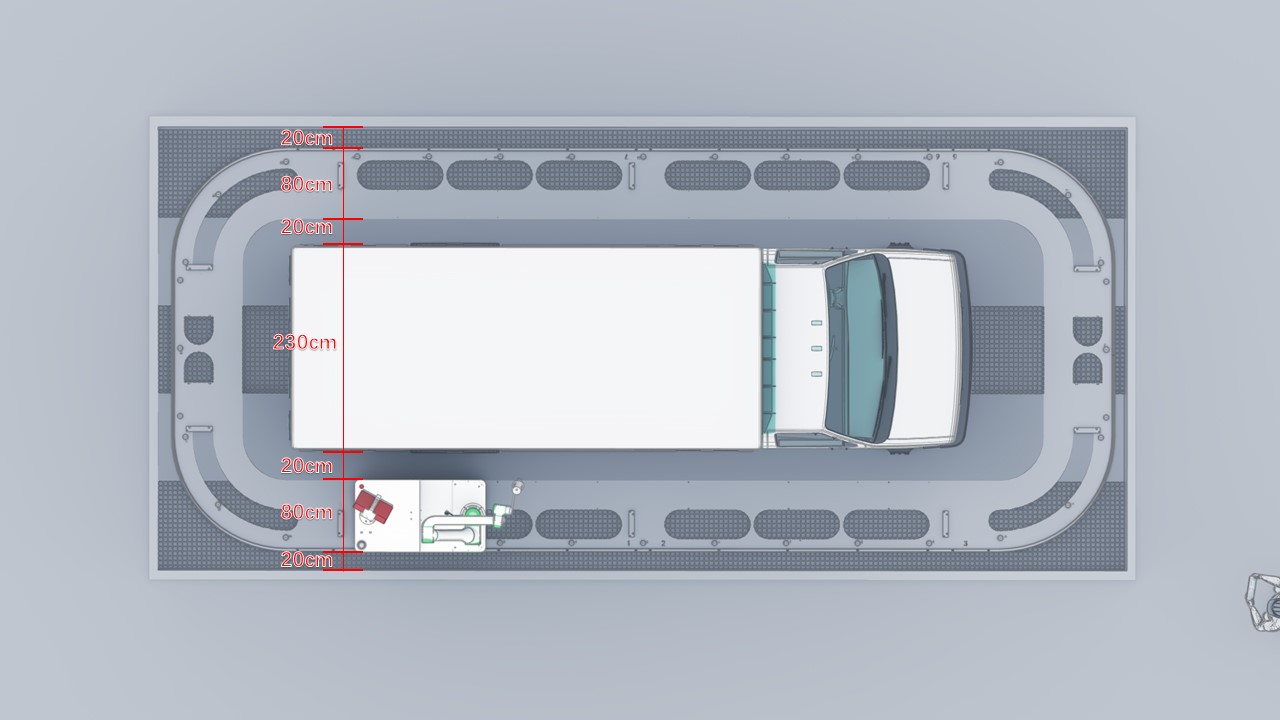
According to research from Tech Panorama (National Science and Technology Council of Taiwan), spray-painting robotic arms must comply with ATEX explosion-proof certification standards. The XTRITON system further integrates VMS-ML intelligent monitoring technology, capable of detecting motion abnormalities within 0.2 seconds to ensure safety during volatile paint operations. This design effectively addresses the space constraints commonly faced by small and medium-sized workshops in Taiwan.
2. Industrial Transformation: The Evolution of Workforce Structure and Service Models
| Traditional Model | Automated Model | |
|---|---|---|
| Technical Barrier | More than five years of training to develop skilled technicians | One-week system operation training |
| Daily Production Capacity | 3–5 full vehicle spray-painting jobs per day | 8–10 full vehicle spray-painting jobs per day |
| Order Flexibility | Single-model batch production | Supports switching among 86 paint formulations |
| Workforce Allocation | Three-person collaborative operation | One operator for monitoring plus a robotic arm |
3. Sustainable Development: Balancing Carbon Reduction, Material Efficiency, and Green Processes
Reducing VOC emissions and resource waste
Traditional manual spray painting often results in excessive paint usage and significant emissions of volatile organic compounds (VOCs) due to unstable spray-gun distance and uneven coating thickness. Automated spray-painting robotic arms, guided by AI vision and path-planning algorithms, can automatically adjust paint pressure and flow speed. This effectively reduces average paint consumption by approximately 18%, while VOC emissions are simultaneously reduced by more than 25%, meeting both Taiwan’s and international environmental standards.
Improving Material Utilization Efficiency and Enabling Circular Manufacturing
The XTRITON intelligent spray-painting system incorporates a paint recovery module that captures overspray not adhered to the vehicle body, filters it, and reuses it—reducing paint waste and extending material lifespan.
Combined with precise layered coating control, the system can automatically adjust coating thickness for different body materials such as aluminum alloys and carbon fiber, preventing over-application and avoiding unnecessary energy and material waste.
Supporting ESG Transformation and Enhancing Brand Value
As global net-zero carbon targets and ESG evaluations become increasingly stringent, adopting automated spray-painting technology has become a critical step in the transformation of the automotive repair and coating industry. Automated systems not only help companies reduce their carbon footprint and hazardous substance emissions, but also enhance corporate social responsibility, strengthen long-term sustainability competitiveness, and earn greater trust and recognition from both vehicle owners and corporate clients.
Where Experience Meets Technology
Automation is not meant to replace experience, but to complement it—unlocking greater potential together. The XTRITON intelligent biomimetic automated spray-painting robot system features a “simulated brain” capable of instantly scanning the shape and position of various workpieces, automatically adjusting spray angles and path planning, and simulating and evaluating coating results. Designed with the characteristics of Taiwan’s aftermarket in mind, the system offers a simple and intuitive operation interface that requires no advanced academic background to master quickly. For craftsmen who entered the industry through vocational training, this represents an extension of familiar skills rather than an entirely new challenge. When experienced artisans work alongside intelligent equipment, the automotive painting industry enters a new era of quality and efficiency.